OEM/ODM Guide

How to Develop a Private Label TENS Unit: From Concept to Mass Production

Developing a private label TENS unit involves more than adding a logo to an existing device. For distributors, healthcare brands and electrotherapy product companies, a successful OEM project starts with defining the target market, product configuration, customization level, packaging requirements and expected order volume.

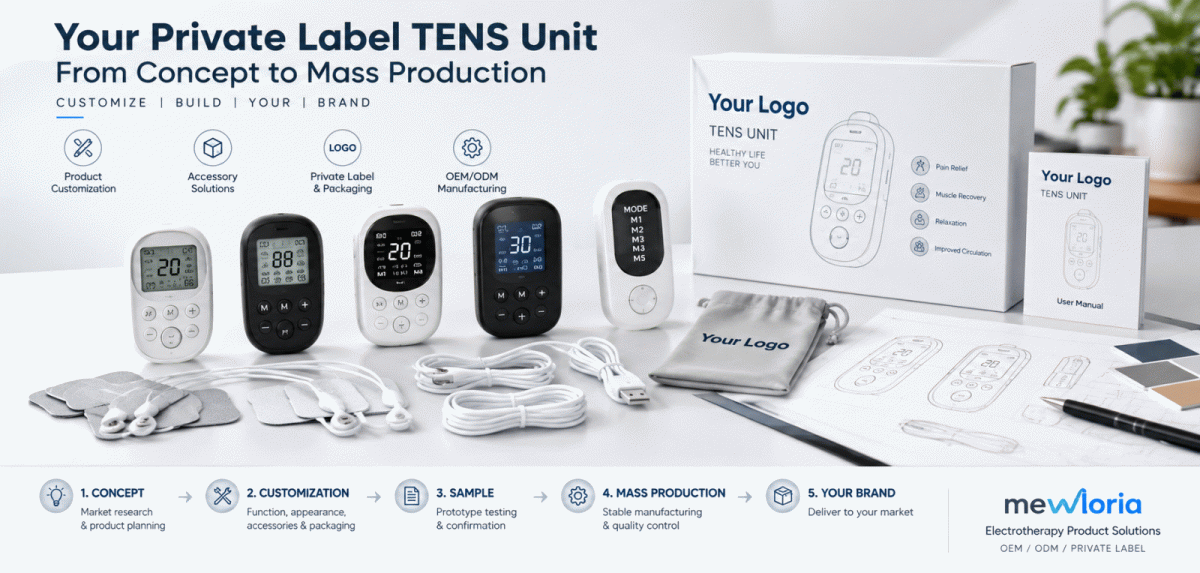
A clear development process helps both the buyer and manufacturer reduce unnecessary revisions, control project costs and move from initial concept to production more efficiently. Below is a practical overview of how a private label TENS project can progress from product planning to mass production.

Define Your Market and Product Requirements

The first step is not choosing a housing color or packaging style. It is defining where and how the product will be sold. A TENS unit developed for an online consumer brand may require a different product configuration, accessory set and packaging strategy from one intended for a distributor, rehabilitation supplier or professional channel.

Before requesting a quotation, buyers should clarify several basic requirements: target country or region, intended application, preferred channels, expected functions, target price range, initial order quantity and branding requirements. These details allow the manufacturer to recommend a more suitable existing platform or determine whether deeper customization is necessary.

Select the Product Platform and Customization Level

For many private label projects, developing every component from zero is unnecessary. Buyers can often begin with an existing TENS platform and customize the elements that matter most to their market. This approach can shorten development time while providing enough differentiation for a new brand or product line.

Typical customization options may include housing color, logo, user interface, pulse programs, intensity settings, channel configuration, electrode pads, lead wires, accessories, packaging and user manuals. Projects requiring new industrial design, hardware architecture or specialized functions generally involve a longer development cycle and additional engineering evaluation.

Build and Validate the Sample

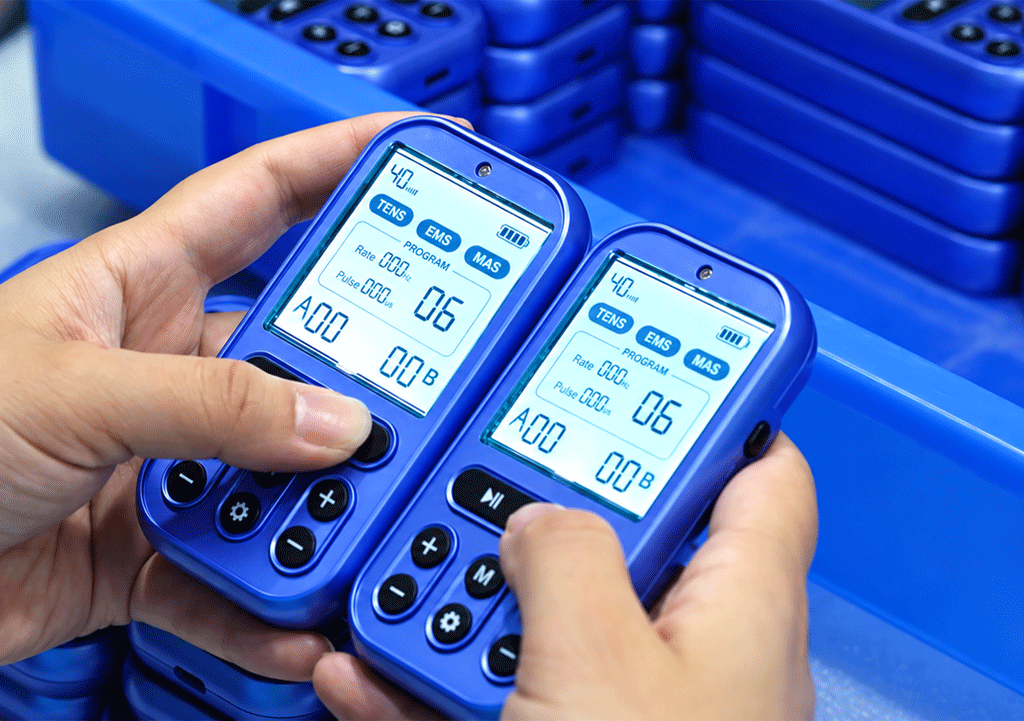
Once the product specification is confirmed, the next stage is sample preparation. A sample should be treated as a functional reference for the final product rather than simply a demonstration unit. Buyers should review the device operation, output experience, display information, controls, accessories, labeling and packaging details before approving the project for production.

Any market-specific requirements should also be identified at this stage. Regulatory, labeling and documentation requirements can vary by target market and intended product claims, so these factors should be discussed early rather than after mass production has started. Final specifications should be documented and confirmed before the production version is released.

Move from Pilot Production to Mass Production

After sample approval, the project moves into production preparation. Materials, components, branding files, packaging specifications and production requirements are confirmed before the manufacturing schedule is arranged. Depending on the project, a pilot run may also be used to verify assembly consistency and production readiness before larger-volume manufacturing.

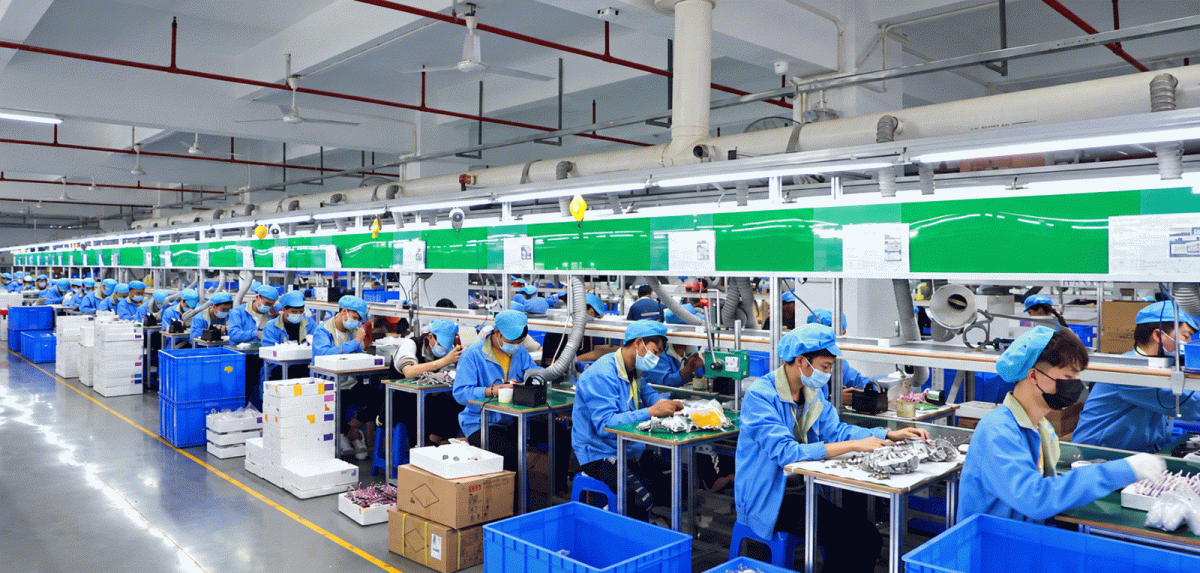
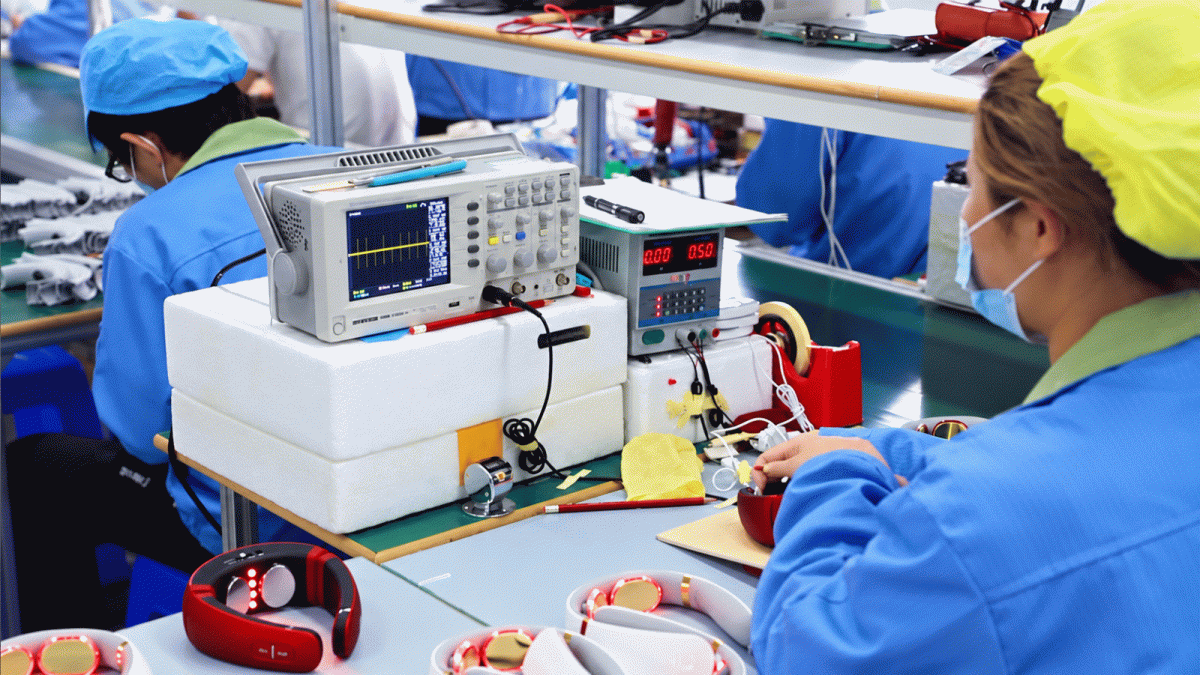
Quality control should continue throughout production rather than only at the final packing stage. Incoming materials, key components, assembly processes and product functions can be checked at different points of the production cycle. Finished units should also be reviewed for appearance, labeling, accessories and packaging accuracy before shipment.

For buyers planning a private label TENS project, providing clear requirements at the beginning can significantly improve communication with the manufacturer. Share your target market, required functions, estimated quantity, branding needs and preferred delivery schedule with Mewloria, and our team can help evaluate a suitable product platform and development route for your project.

One thought on “How to Develop a Private Label TENS Unit: From Concept to Mass Production”

  1. An Engaging Blog Post

Comments are closed.